
Dry eye can be a frustrating and complex condition, but Dr. Alma Regnault and the team at Weston Eye Care Center are here to make it easier to understand and manage. Our goal is to help you find real relief by educating you about dry eye disease and offering personalized, effective treatment options designed around your unique needs.
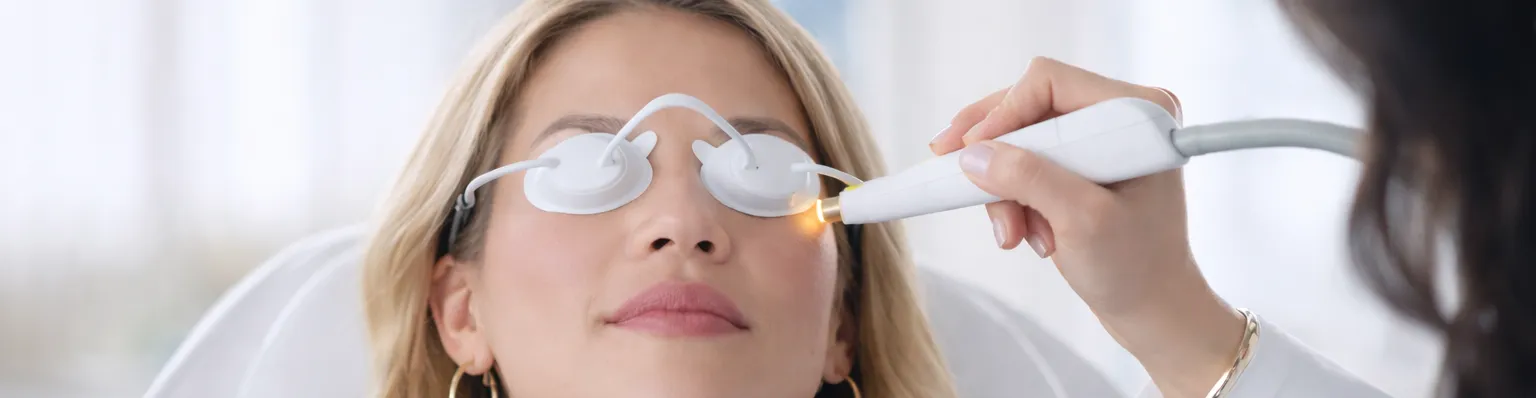
To do so, we take a very hands-on approach to educating our patients about dry eye and offer technology such as OptiLIGHT by Lumenis for treatment and relief. With our technology and full-scope dry eye assessments, we aim to provide a comprehensive experience for dry eye care.
Contact us to schedule an appointment and get started on the path to relief from dry eye today.
Understanding Your Tear Film
Dry eye is a condition that can be caused by inconsistencies in your tear film, which consists of 3 layers:
- The oily outer layer
- The watery middle layer
- The inner mucus layer
Dry eye can occur when the glands that produce these elements of your tears are not functioning properly or become inflamed. Inflammation and other dry eye symptoms can also be caused by meibomian gland dysfunction (MGD).
Meibomian Gland Dysfunction & Dry Eye
Meibomian gland dysfunction (MGD) is a chronic and progressive condition that can affect the function of the meibomian glands in your eyelids. These glands produce an oily layer that helps lubricate the surface of your eyes and stop your tears from evaporating too quickly.
MGD is a leading cause of dry eye disease around the world, and its symptoms can include:
- Watery eyes
- Fluctuating or blurry vision
- An inability to wear contact lenses or eye makeup
Intense pulsed light (IPL) technology, such as OptiLIGHT by Lumenis, can help treat MGD by gently stimulating your meibomian glands, helping them to release the natural oils needed to lubricate the eyes. We also offer meibomian gland expression as one of our treatment options.
Understanding Ocular Rosacea and Blepharitis
Ocular rosacea and blepharitis are common conditions that can significantly impact the health of your eyes, leading to discomfort and, in some cases, affecting your vision.
While there is no cure for ocular rosacea and blepharitis, proper management could help alleviate symptoms and possibly prevent further complications.
To effectively detect and diagnose conditions such as ocular rosacea and blepharitis, we use a number imaging techniques that provide a clear view of the intricate structures of the eye. These can include meibography and anterior surface imaging.
Ocular Rosacea
Ocular rosacea is an extension of rosacea that affects the eyes, making them appear red and irritated. Up to 41% of individuals with rosacea may experience eye-related symptoms, which can manifest in both eyes.
Symptoms of ocular rosacea include:
- Chronic blepharitis
- Meibomian gland dysfunction
- Corneal damage
Blepharitis
Blepharitis is characterized by inflammation of the eyelid margins, where eyelashes grow. It can be associated with several conditions, including acne rosacea, seborrheic dermatitis, and the presence of Demodex mites in eyelash follicles.
This condition can lead to symptoms such as:
- Red, swollen eyelids
- Itching
- Burning
- The sensation of something in the eye
The Types of Dry Eye
Dry eye is a multi-factorial disease of the eye surface that can be caused by a variety of factors and can generally be classified into 2 main types: aqueous-deficient and evaporative.
These different types of dry eye feature different characteristics and causes. Identifying the specific cause of your dry eye symptoms and the type of dry eye disease affecting your eyes is often crucial for determining the right form of treatment.
AQUEOUS-DEFICIENT DRY EYE
Aqueous-deficient dry eye occurs when your eyes fail to produce enough of the watery component of your tears.
Aqueous tear deficiency can arise when the lacrimal glands located in your conjunctiva (the thin, clear membrane on your eye’s surface) do not function properly due to various causes, such as autoimmune diseases, medications, obstructions, or damage. As a result, the volume of tears available is insufficient to protect your eyes or provide comfortable and stable vision.
Evaporative Dry Eye
Evaporative dry eye occurs when there is not enough oil in your tears, leading to the quick evaporation of tears from your ocular surface. This condition is more common than other types of dry eye and can cause symptoms such as dryness, irritation, redness, and blurred vision.
Evaporative dry eye occurs when there is an inadequate or unhealthy lipid layer in your tear film, leading to unstable tears. The most common cause of evaporative dry eye is meibomian gland dysfunction (MGD).
